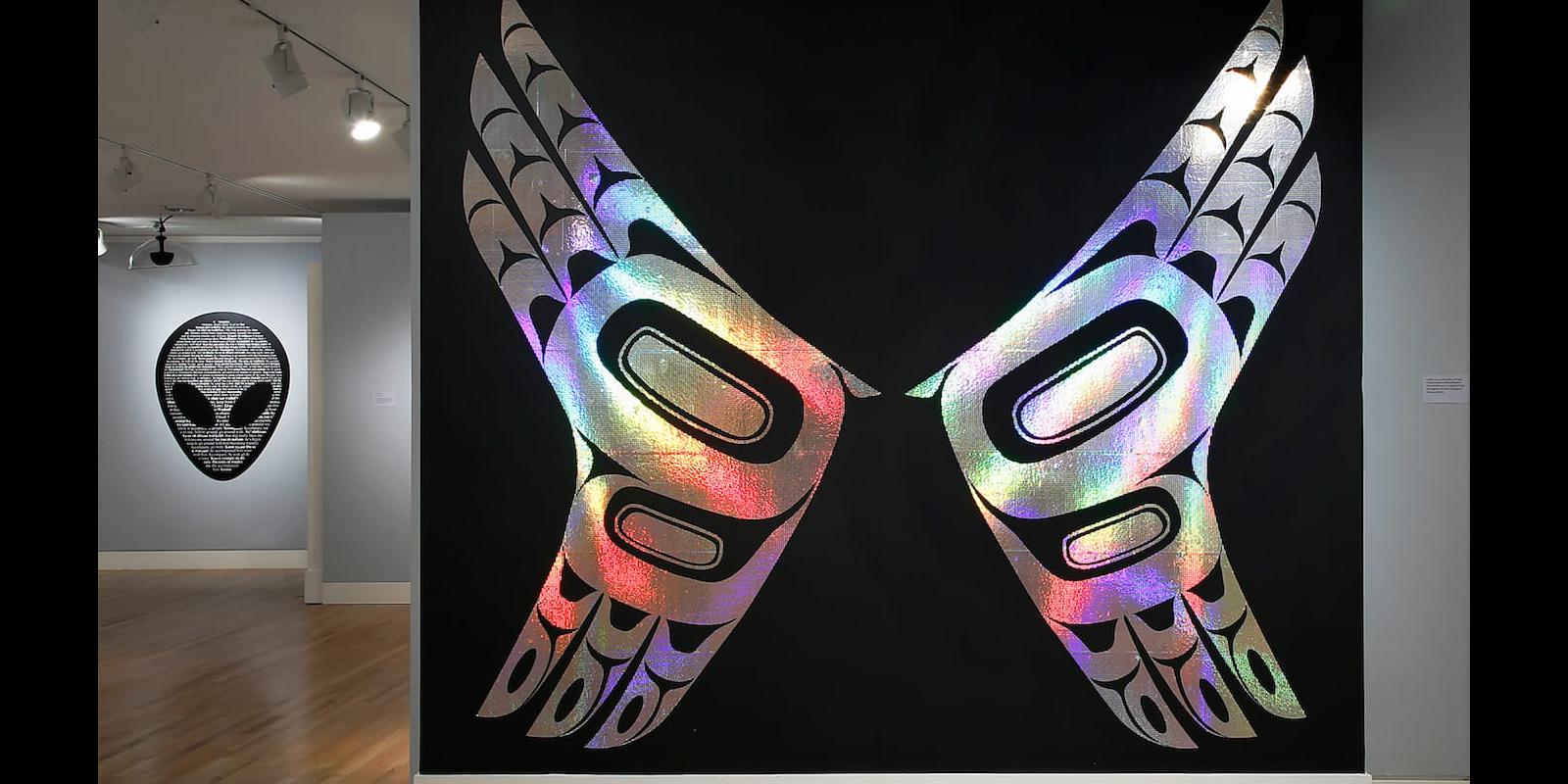
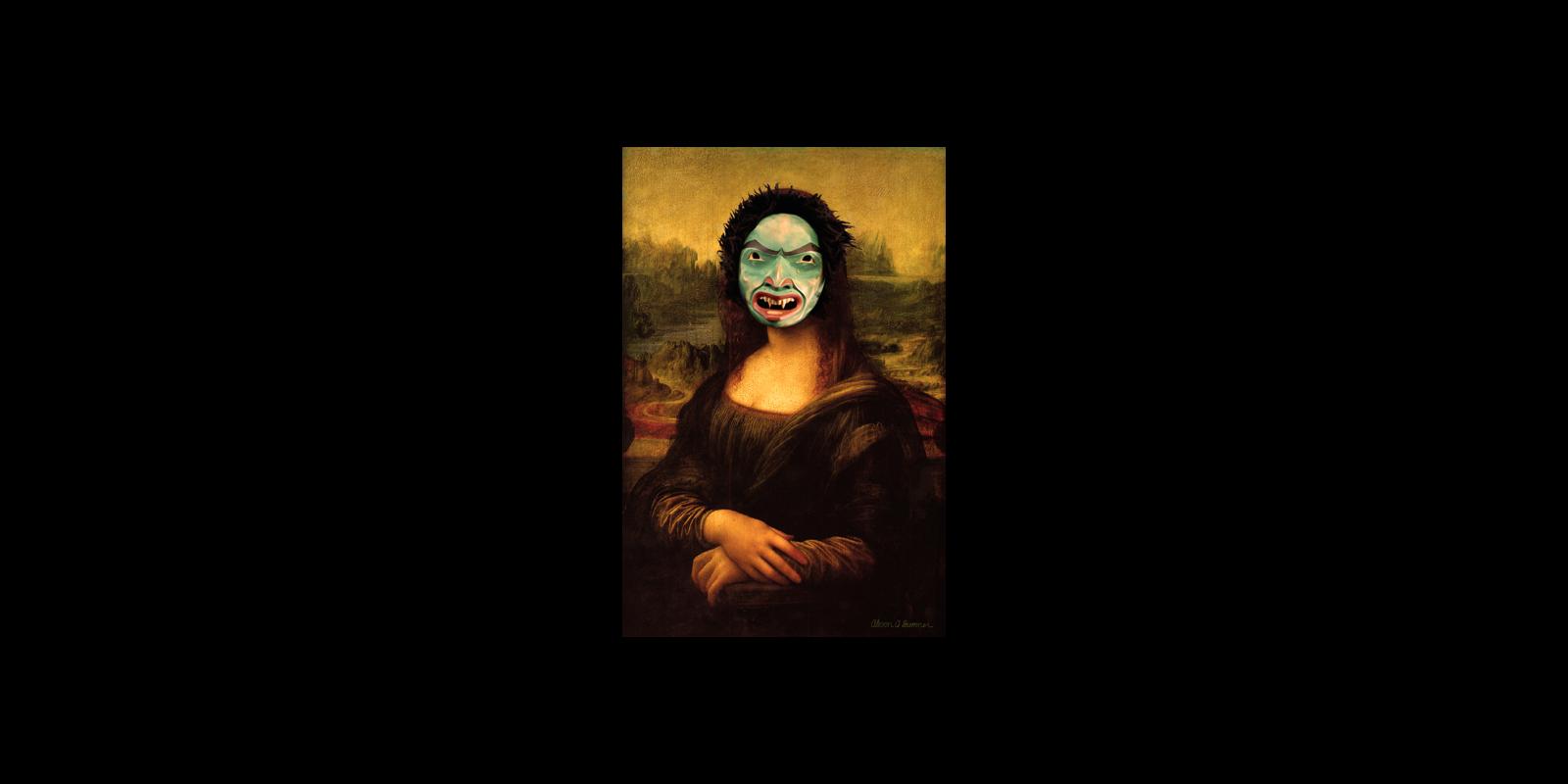
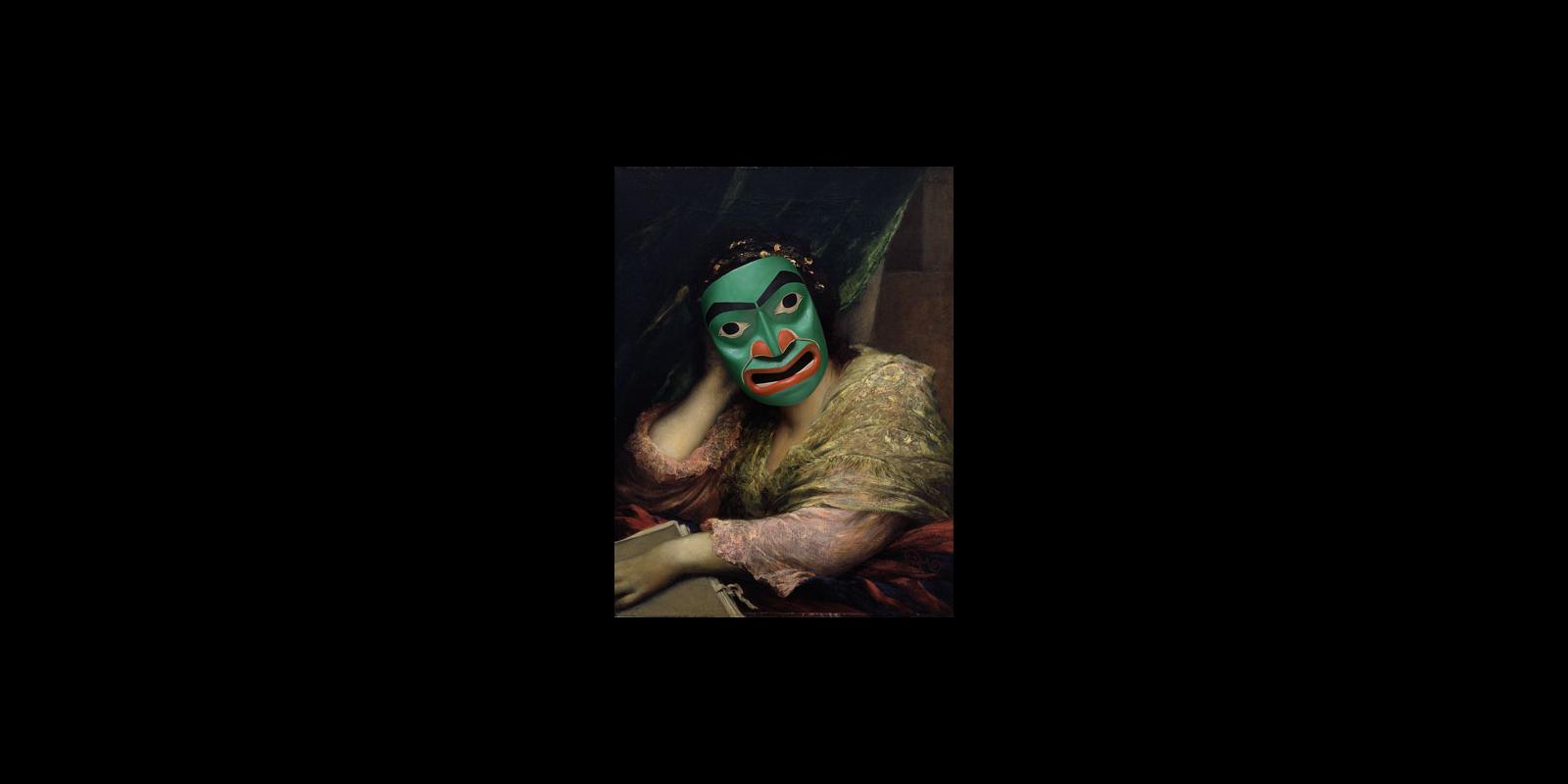
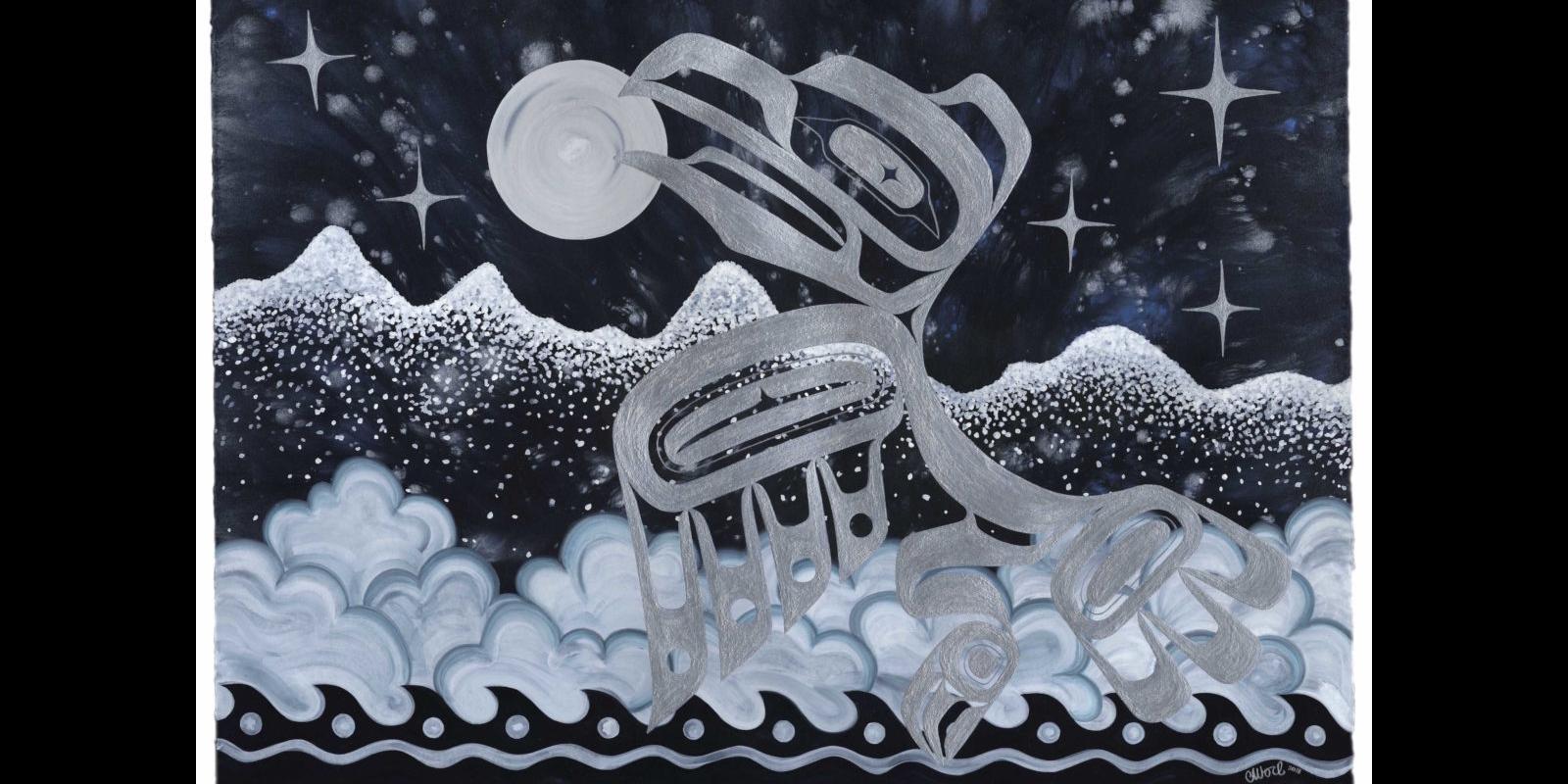
Alison O. Marks (née Bremner) is a Alison Bremner (b. 1980), a Tlingit artist from Yakutat in Southeast Alaska, of the Raven moiety (Sex̱’náx̱ clan). Raised between Tlingit and non-Native worlds, her work reflects a sharply observant, often humorous engagement with the complexities of contemporary Indigenous identity, cultural continuity, and representation.
Working across painting, carving, printmaking, and regalia, Marks moves fluidly between customary Northwest Coast visual languages and contemporary forms of critique. Her practice frequently incorporates formline design alongside text, satire, and recontextualized imagery, addressing themes such as colonial narratives, commodification of Native culture, gender, and sovereignty. Through this approach, she positions Tlingit art not as static tradition but as an active, evolving intellectual and cultural system.
Marks trained in Northwest Coast design under master carvers David R. Boxley and David A. Boxley, grounding her contemporary work in rigorous formal knowledge of Indigenous design systems. Alongside her studio practice, she is deeply engaged in cultural revitalization in Yakutat, contributing to the continuation of ceremonial arts, regalia-making, and knowledge transmission within her community. This dual commitment—to critical contemporary discourse and to living tradition—defines the core of her work.
Her artwork has been exhibited widely across the Pacific Northwest and internationally, including in galleries in Vancouver and Victoria, British Columbia, and Seattle. Her work is held in major institutional collections, including the Burke Museum of Natural History and Culture, the Portland Art Museum, and the British Museum. She has also exhibited with institutions such as the Institute of American Indian Arts and the Alaska State Museum.
Marks is widely recognized for works that blend wit and critique, including text-based paintings that directly confront stereotypes and historical narratives, as well as meticulously executed carvings and regalia that affirm cultural continuity. Her practice demonstrates how contemporary Indigenous artists actively shape both the present and future of their cultural traditions.
Selected Public Commissions & Installations
(Public commissions are less centralized in documentation than exhibitions; the following reflects verified and commonly cited works and institutional placements.)
- “Unconquered” (2018) – Public installation, Institute of American Indian Arts, Santa Fe, NM
- “Kill the Indian, Save the Man” (2016) – Widely exhibited painting (institutional collections and exhibitions, not fixed public sculpture)
- “Big Indigenous Girl” series – Exhibited across multiple institutions including university and museum spaces
- Regalia and carved works for ceremonial use – Yakutat community (ongoing, non-commercial cultural commissions)
Note: Unlike artists working primarily in civic monumental sculpture, Marks’ “commissions” often take the form of institutional exhibitions, acquisitions, and community-based ceremonial production rather than permanent public infrastructure.
Collections (Confirmed)
- Burke Museum of Natural History and Culture
- Portland Art Museum
- British Museum
- Alaska State Museum
- Additional university and private collections across the U.S. and Canada
Sources & Further Reading
- Burke Museum of Natural History and Culture – artist collection records and exhibition materials
- Portland Art Museum – Native American art collection database
- British Museum – collection entries
- Institute of American Indian Arts – exhibitions and artist talks
- Alaska State Museum – Alaska Native artist documentation
- Exhibition catalogs and interviews (e.g., IAIA, Burke Museum publications, independent curatorial essays)