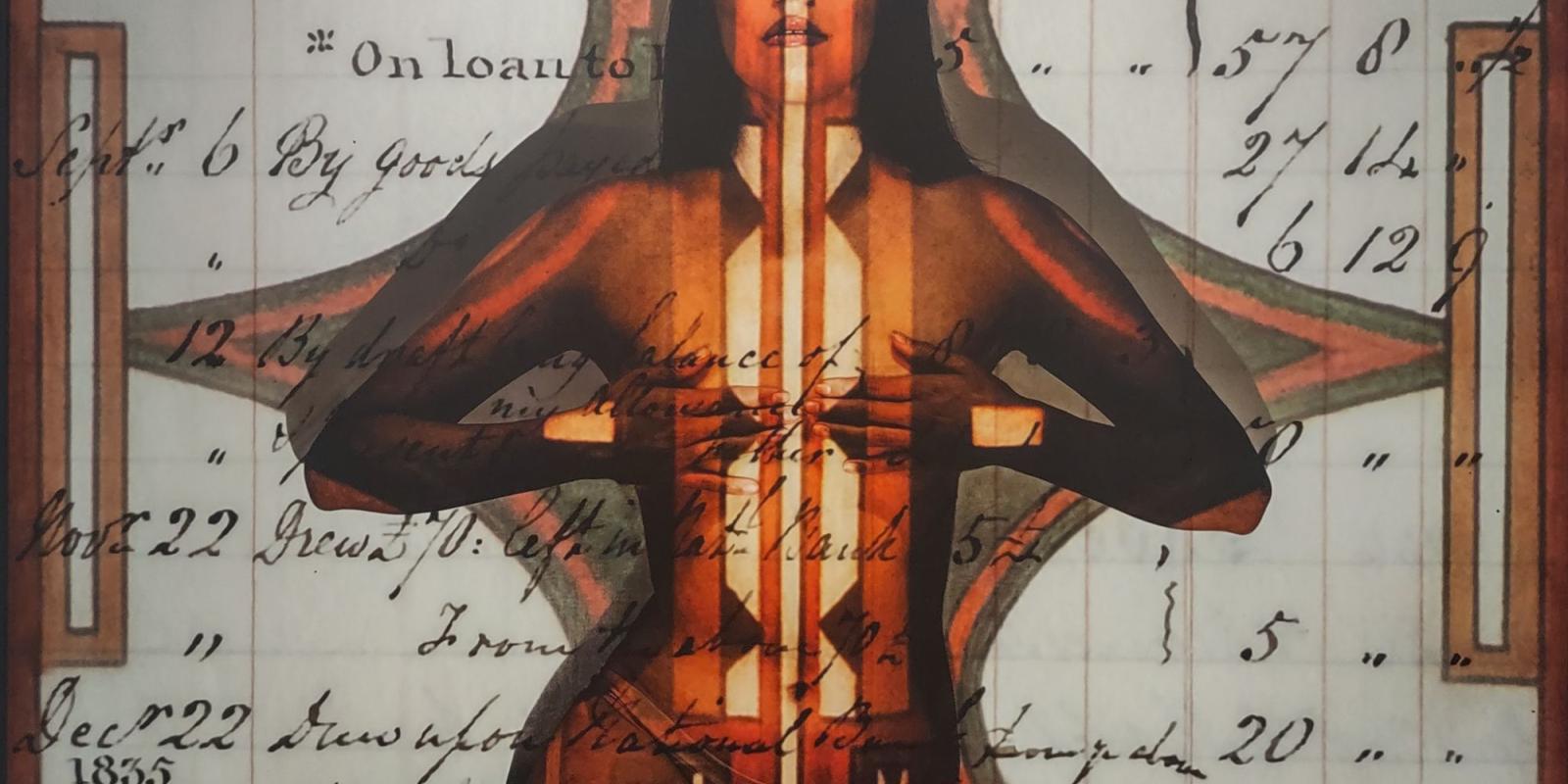
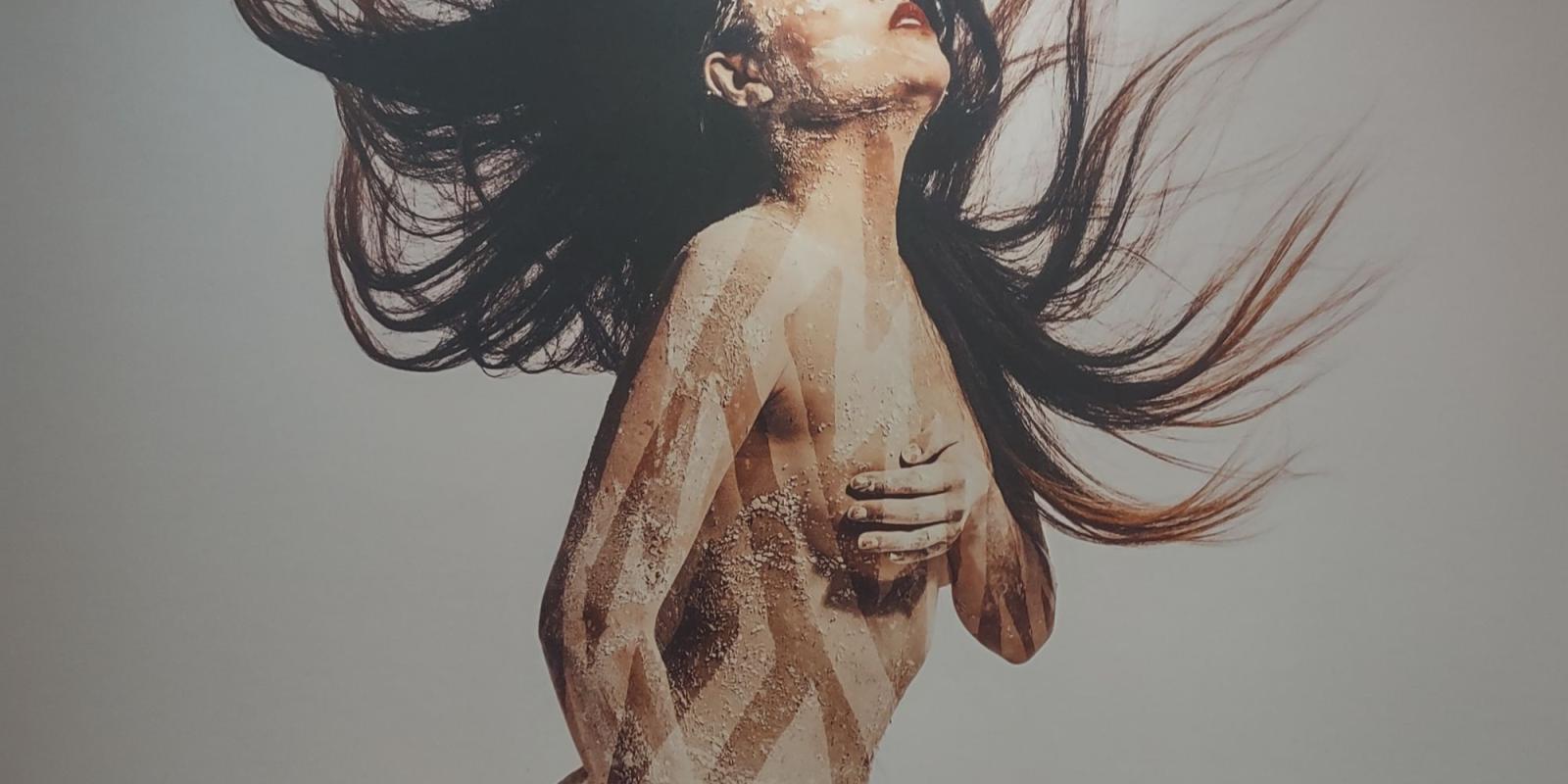
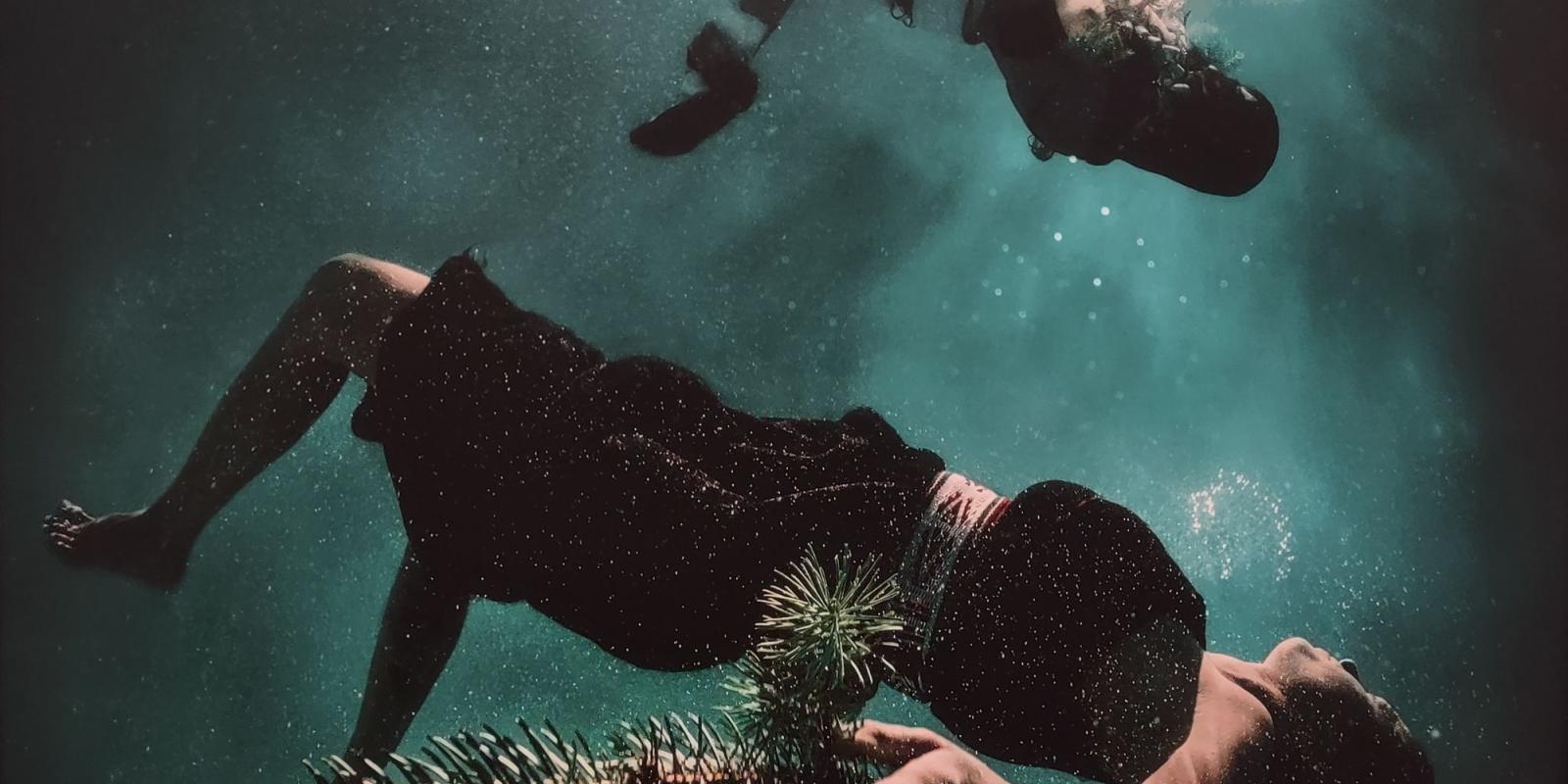
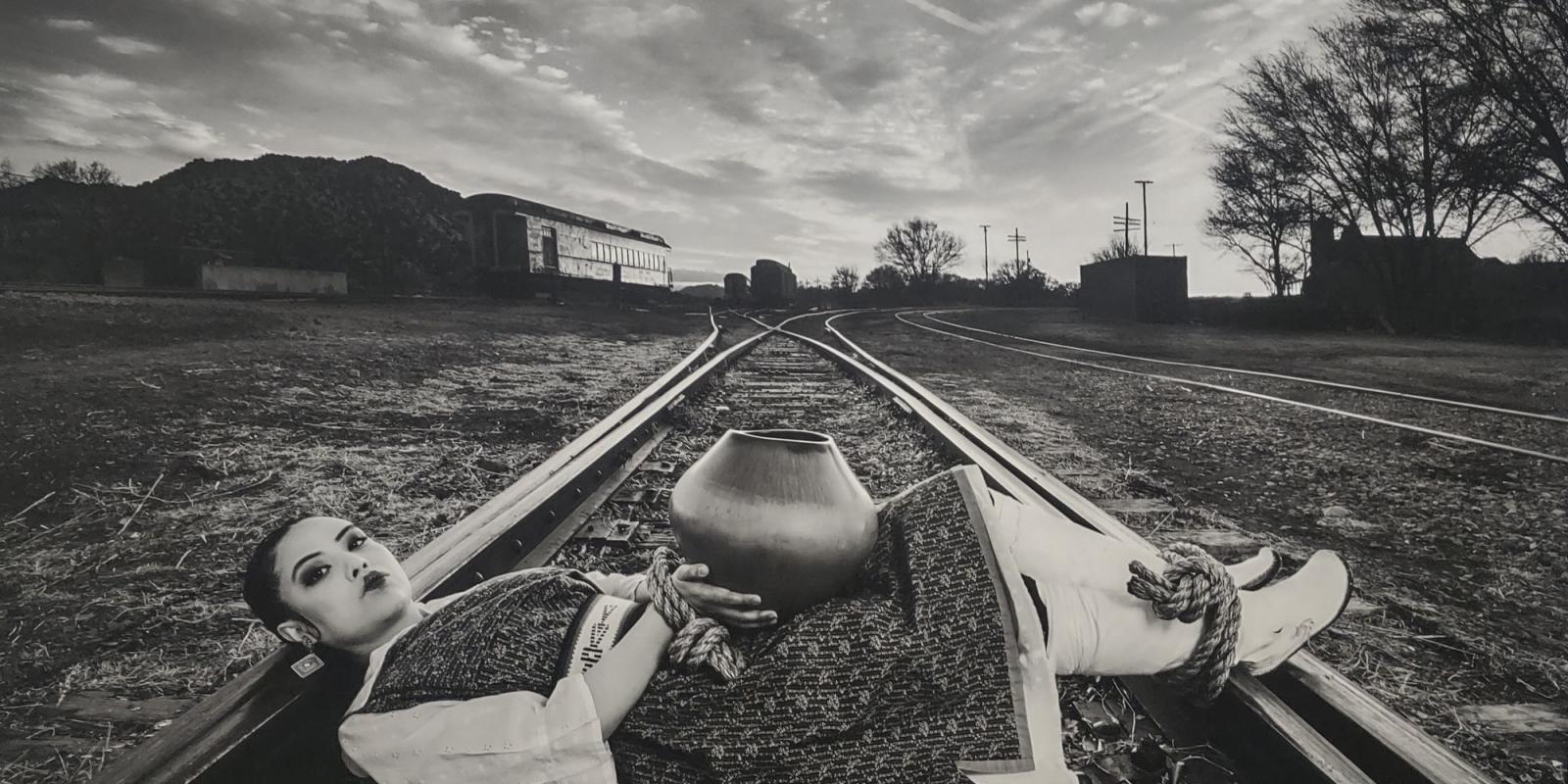
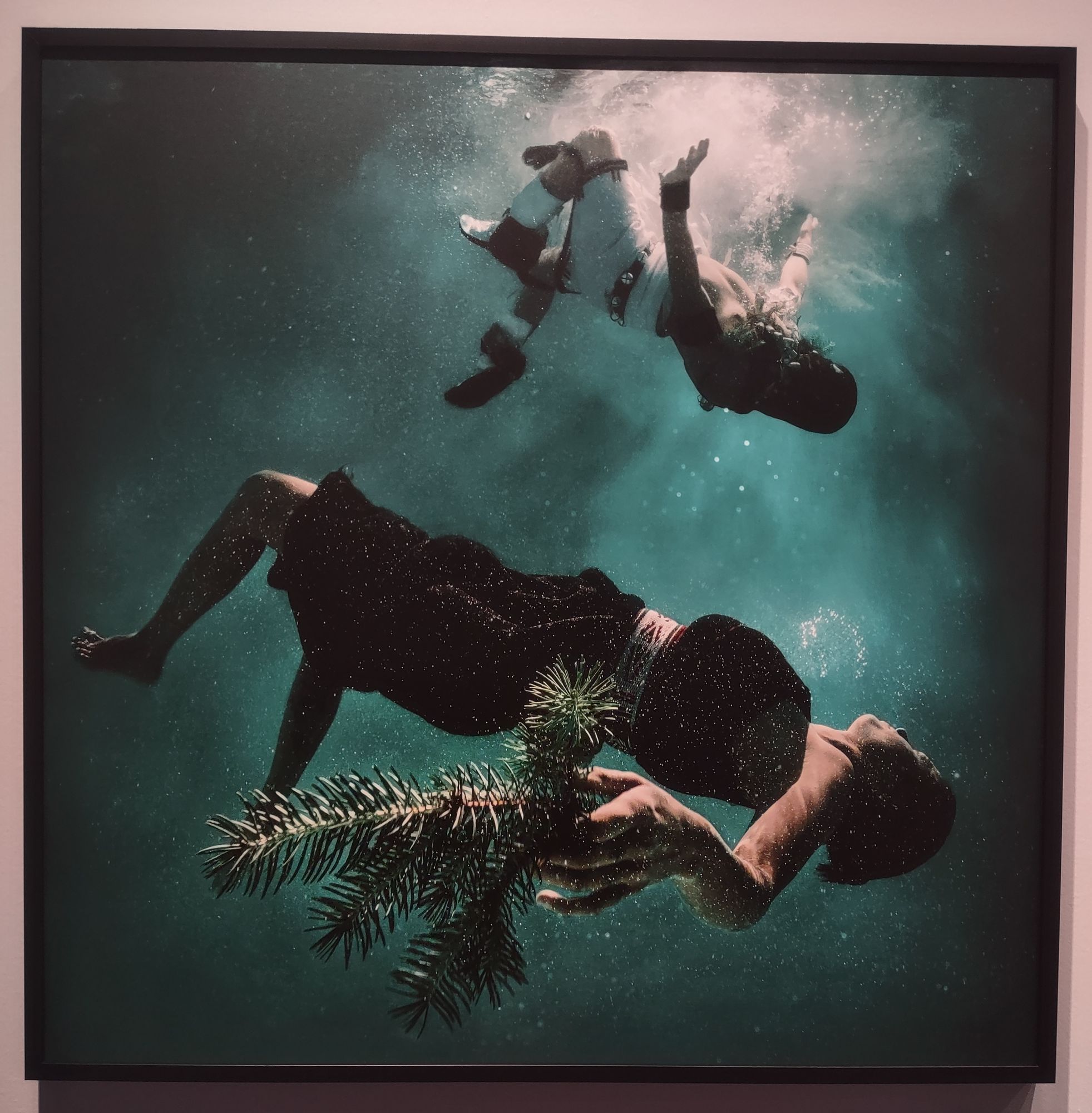
 For several months we eagerly anticipated seeing Cara Romero's photos in person. In fact, so much so that we included the opening as a "save the date" event in our email signature - like only a true fan of great photography as art would after glimpsing her phenomenal "Water Memories" photo announcing the exhibit at an initial venue. Coincidentally or intuitively, this photo had been viewed by other family members and photographed in other cities without prior knowledge or planning.
The photo of the models completely submerged in a marine-scape, wearing traditional Pueblo mantas and sashes, conjured dreamy memories of rain falling on a completely clear day during Feast Days at Laguna Pueblo in particular. We would find out on arrival to the Albuquerque Museum that the photo actually references the severe flooding that occurred following the Las Conchas fires in 2011.
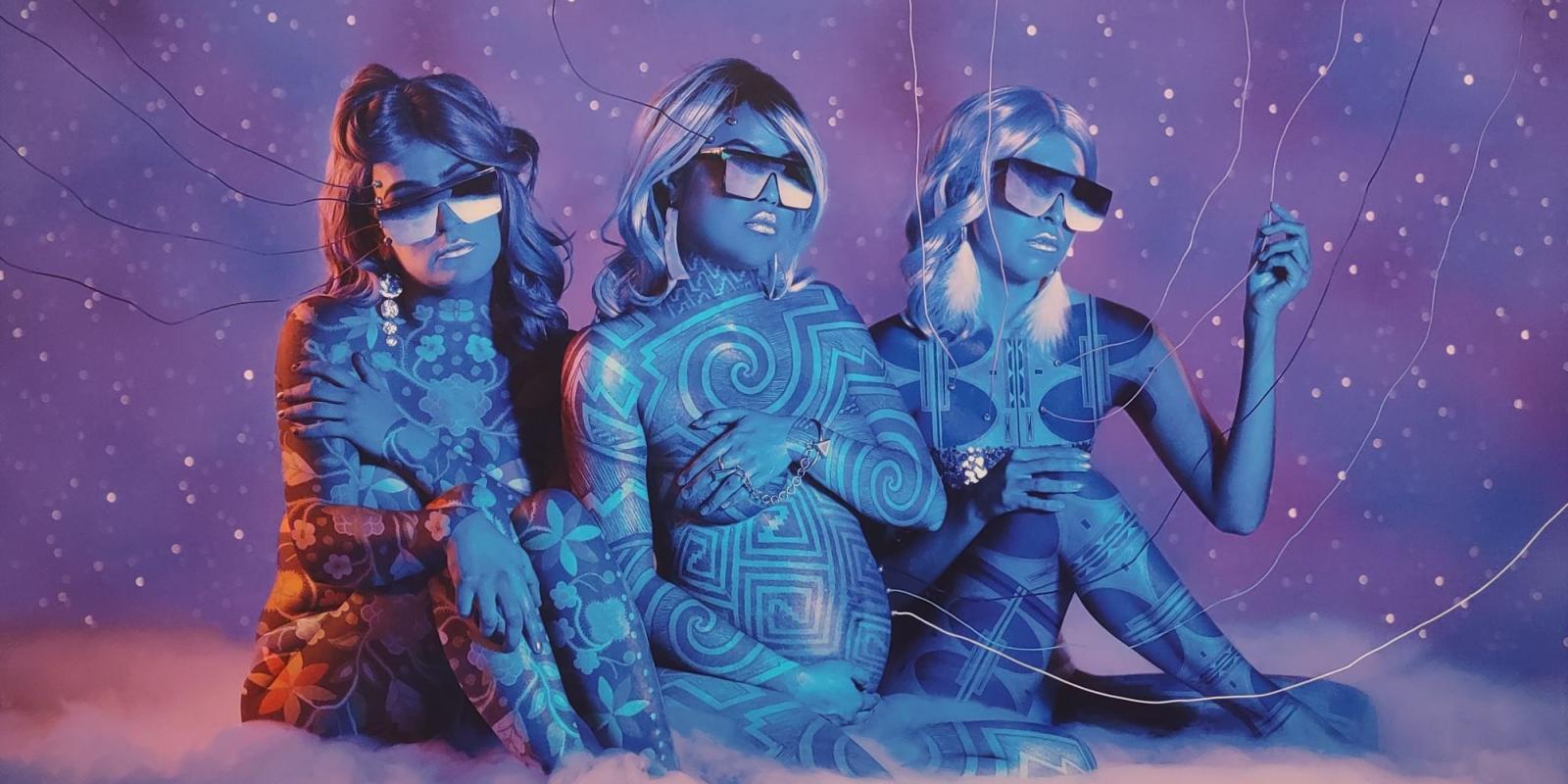
3 Sisters photo is Indigenous futurism at its most lovingly playful and struck a chord both as it addresses sibling connections as well as the beans, corn and squash as part of the traditional Native diet we grew up. In addition, it tapped into generational memory and understanding the symbiotic relationship between the 3 foods and how they actually protect each other for maximum growth.

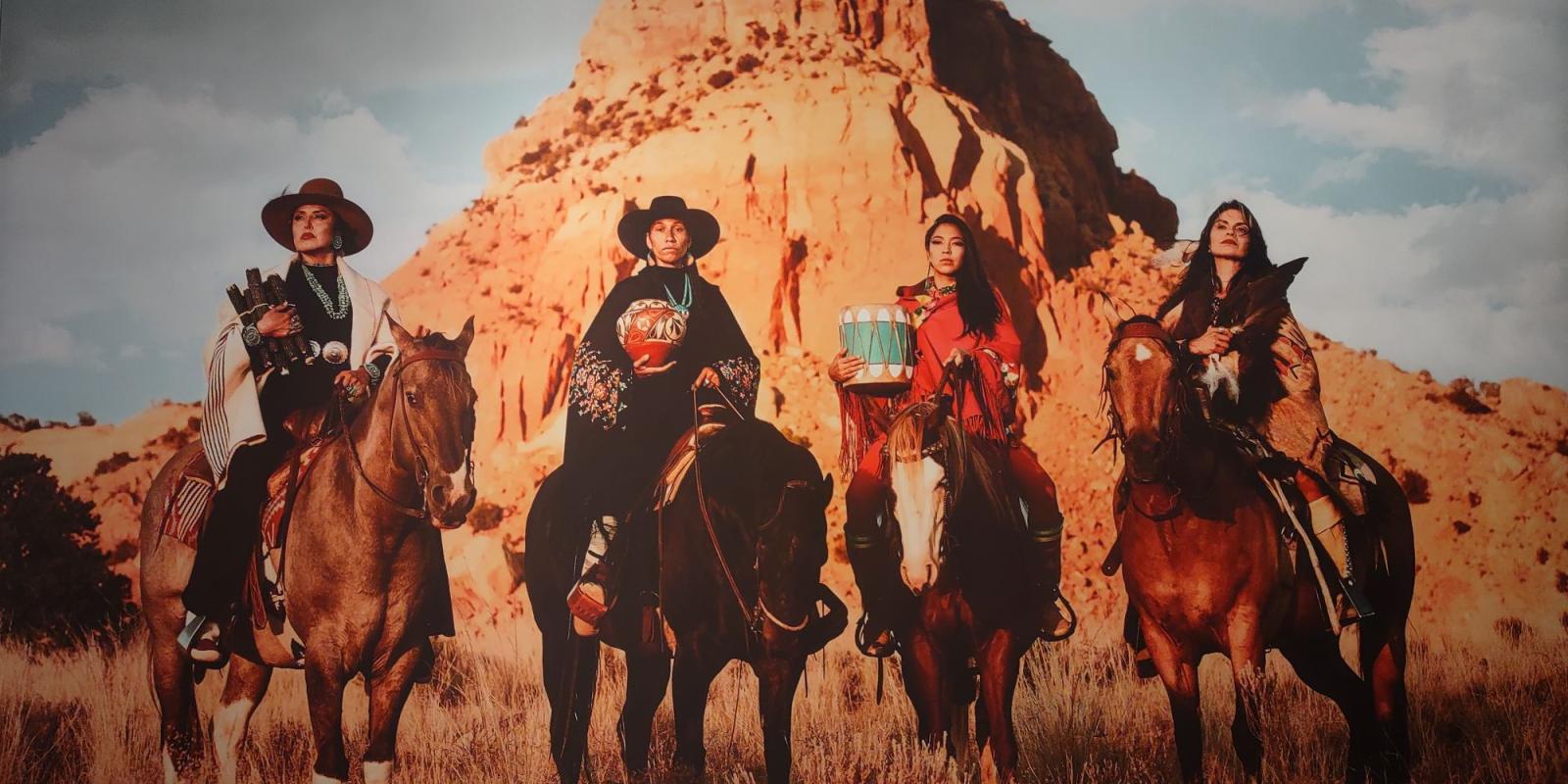
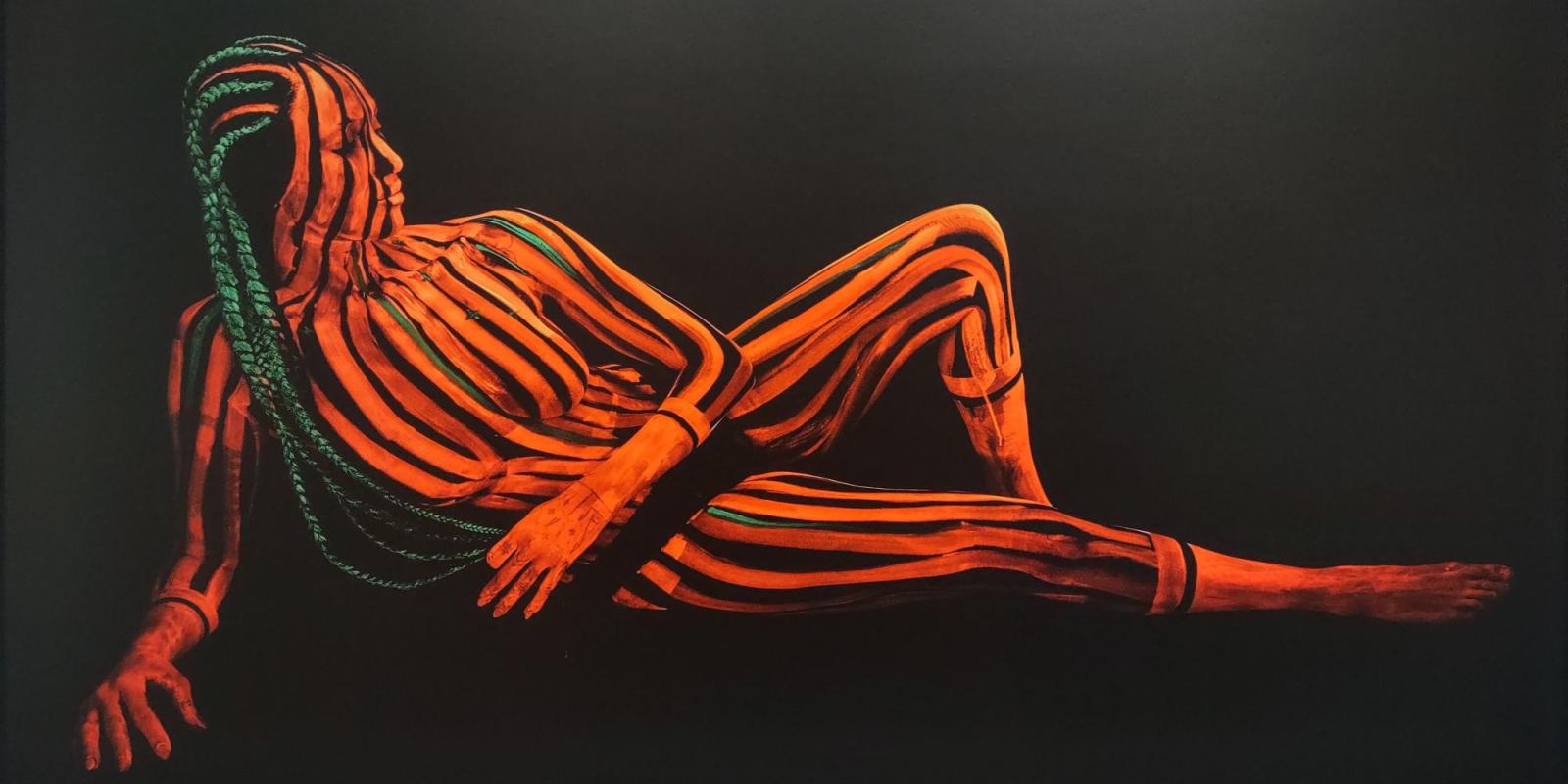
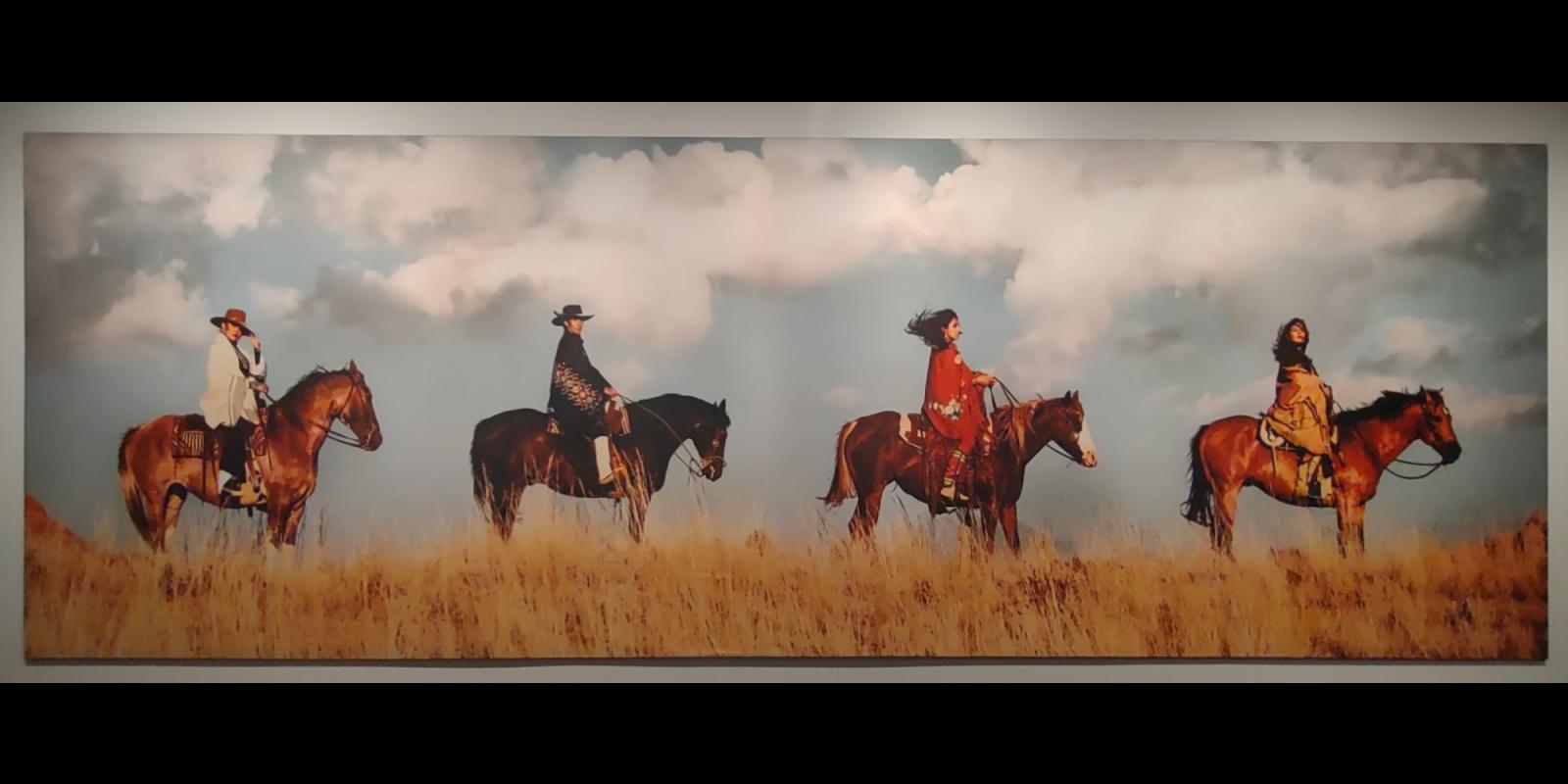
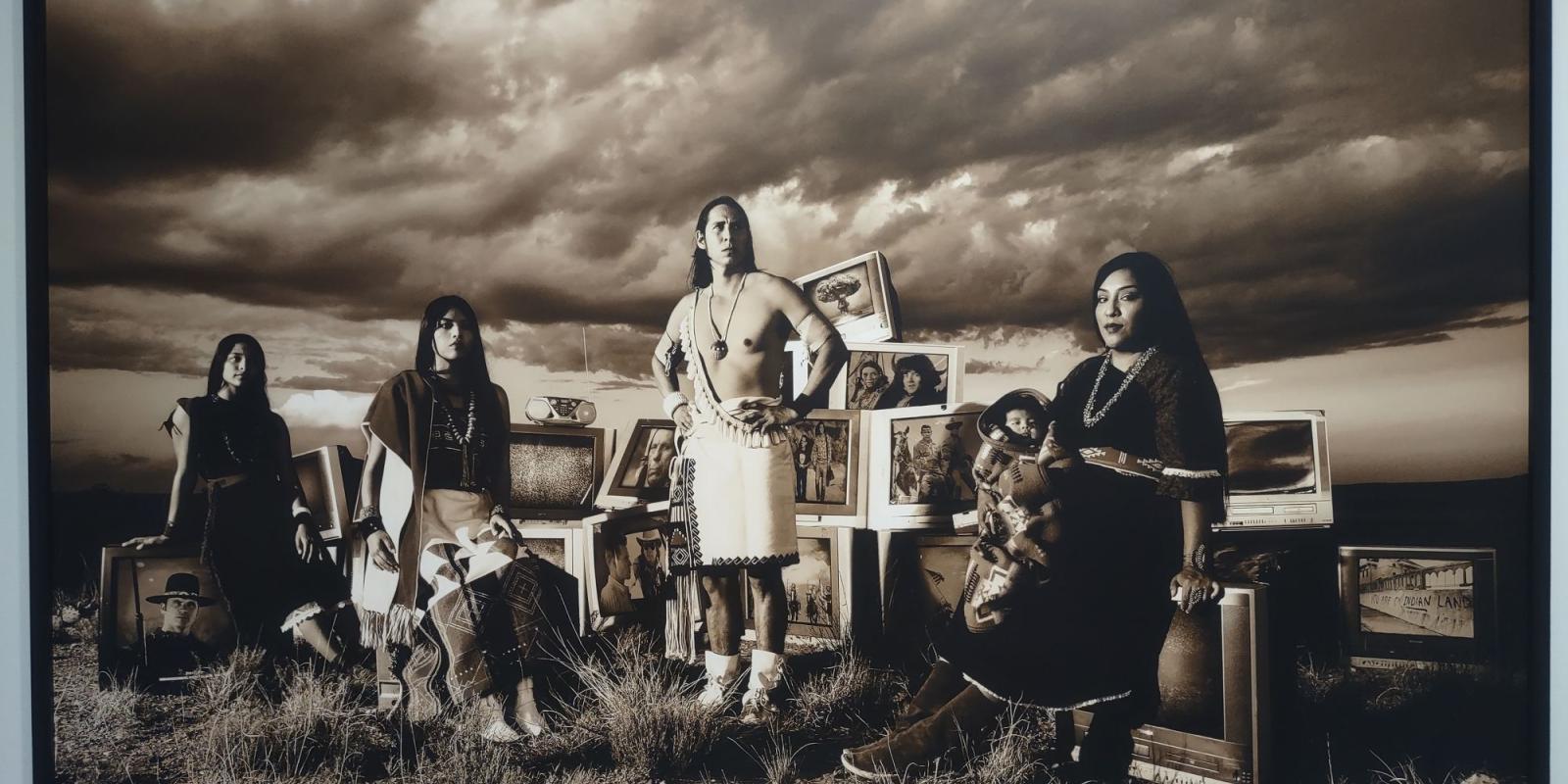
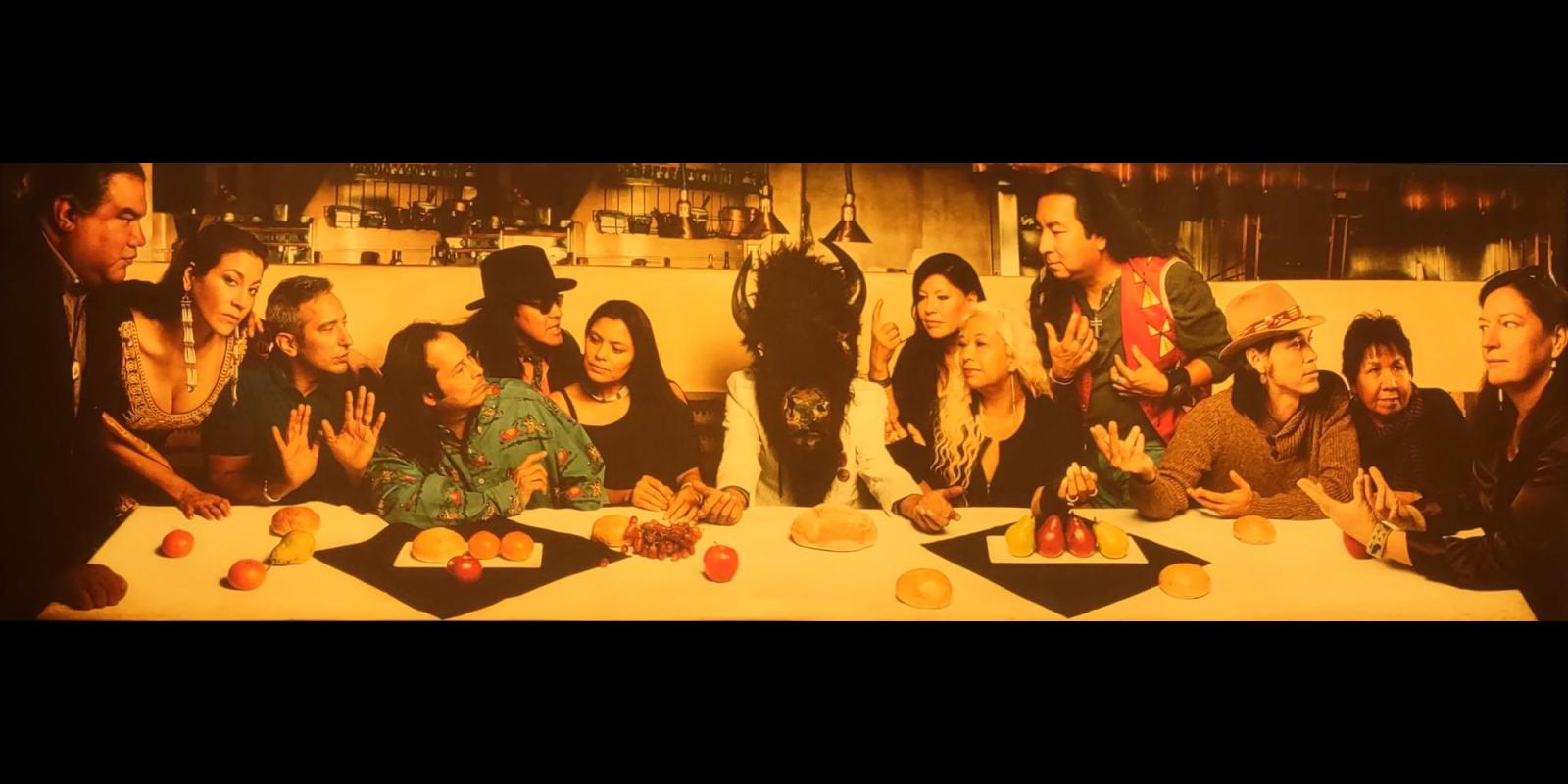
The museum dedicated a notably large gallery space to this exuberant perennial exhibition diving in deep to address the ravages of imperialistic colonialism while still maintaining a sense of humor and the resilience of a nurturing spirit. The exhibit is playful but deeply serious at the same time as it addresses climate change and the enduring strength of Indigenous women at the same time. Cara intentionally bucks stereotypes as she shows incredibly empowered visuals of women gathered and even more intimate solitary moments that play off popular culture including an homage to Tribe Called Quests "The Low End Theory" album cover celebrating Afro-Indigeneity and "Pulp Fiction" movie poster reboot.
Since we arrived in the last hour on the first visit we had to return to be present again with her remarkably stunning photos since the the 4 Horsemen on it's own is a colossal photo series that is one of the most empowering and moving portraits of Native women we have ever seen. It also has an accompanying mini documentary explaining how the four women artists came together for the photo shoot at Ghost Ranch on invitation to Cara Romero from the museum's director at the point that it was shot. We cannot overstate the impact of this exhibit - exiting the exhibit walking 10 feet taller it felt.
Cara and Diego Romero: Tales of Futures Past brings together the distinct yet deeply intertwined practices of photographer Cara Romero (Chemehuevi) and ceramic artist Diego Romero (Cochiti). Conceived as an intergenerational and intermedia dialogue, the exhibition traces how two of the most influential Indigenous artists working today engage the past not as fixed history, but as a living force shaping speculative, resistant futures.
Though husband and wife, the Romeros maintain independent studio practices. What unites their work is a shared visual and conceptual language—one that fuses popular culture, ancestral knowledge, satire, and the supernatural. Across photography and pottery, Indigenous protagonists emerge as agents of power and transformation, grounded in Indigeneity while navigating worlds marked by colonial rupture, environmental violence, and technological acceleration. Storytelling operates here as sovereignty: a means of reclaiming narrative authority across time.
Tales of Futures Past examines the rewriting of historical narratives, the persistence and adaptability of Indigenous identity, environmental racism, and ancestral evolution. The exhibition debuted at the Figge Art Museum in Davenport, Iowa, where it was organized, before traveling to subsequent venues.
The exhibit closes at the Albuquerque Museum February 8, 2026.
Tour Venues:
- Figge Art Museum, Davenport, Iowa — March 8 – June 8, 2025: The national tour’s launch where the exhibition first brought together key works across both artists’ practices. figgeartmuseum.org
- Crocker Art Museum, Sacramento, California — June 29 – October 12, 2025: Continuing the narrative arc, this installation situates the Romeros’ work within California’s rich Indigenous and artistic histories. crockerart.org
- Albuquerque Museum, Albuquerque, New Mexico — November 1, 2025 – February 8, 2026: At this current venue, the show underscores its deep cultural resonance in the Southwest, including new large-scale works by Cara Romero and expanded programming. City of Albuquerque
Additional Future Venues (Through Summer 2026) — Scheduled to travel to a fourth institution as part of its extended national tour (details forthcoming). figgeartmuseum.org
Supported in part by the Carl & Marilynn Thomas Foundation, the exhibition invites audiences to inhabit a multilayered time—where the past informs the present and future futures are imagined through Indigenous eyes.